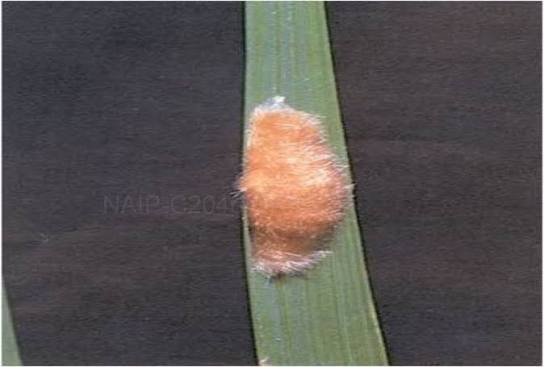
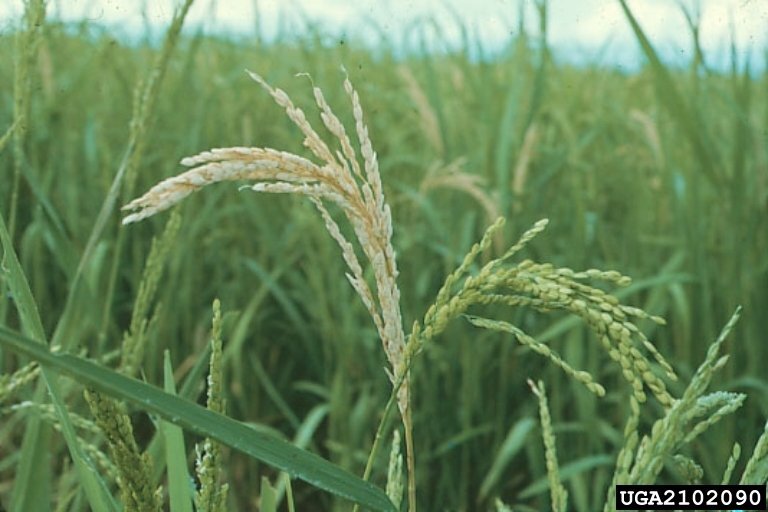
Yellow Stem borer
Caused by: Scirpophaga IncertulasProblem Category: Stem borer, insect pest
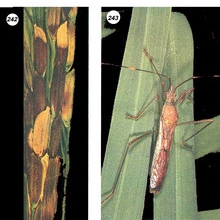
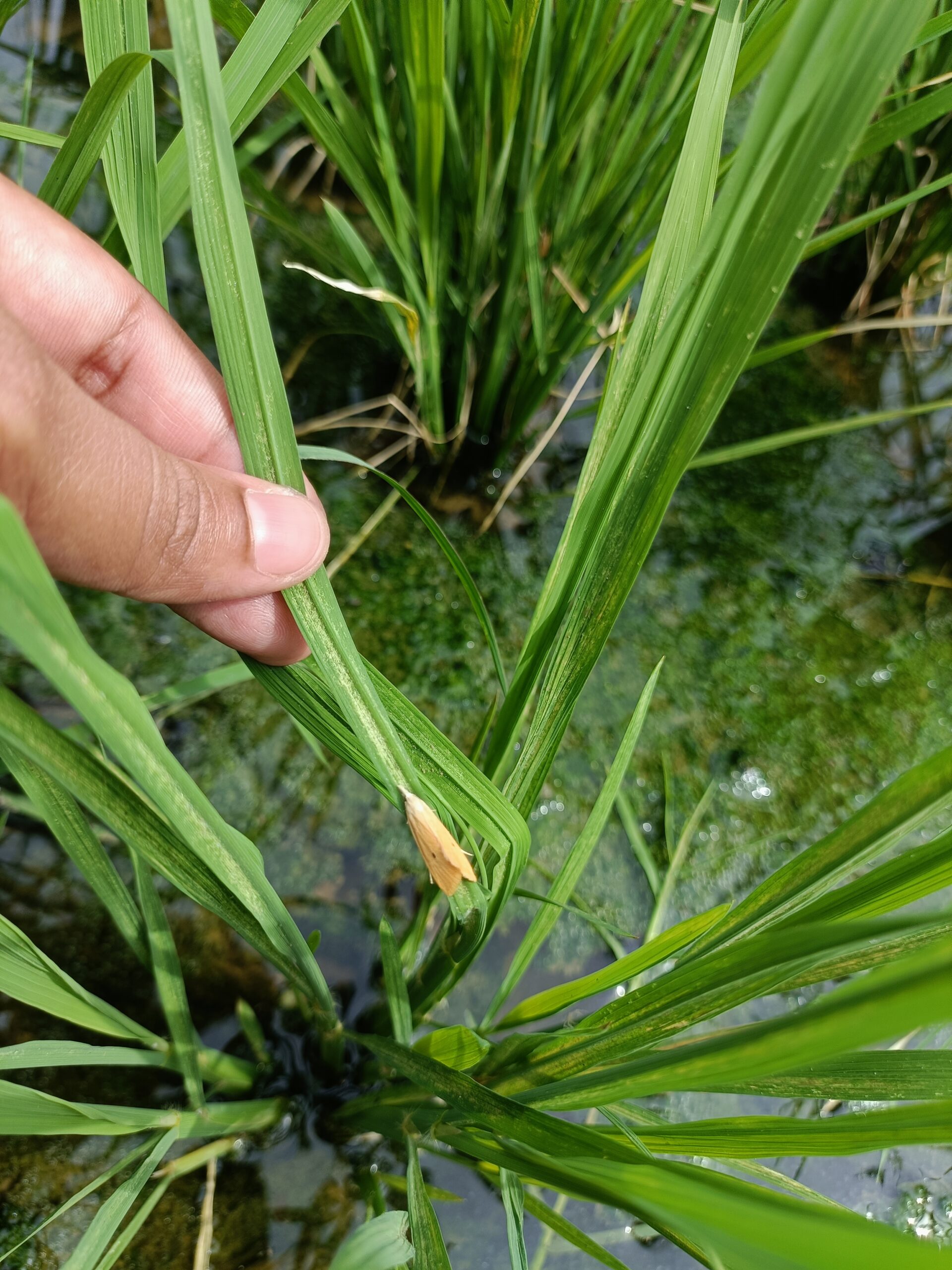
Symptoms: Freshly hatched larvae hang from leaves with salival threads and disperse to the neighbouring plants by wind. They first nibble inside leaf sheath and soon bore into the stem. Due to feeding on shoot tip internally, death of terminal shoot (Dead heart) in vegetative stage and white chaffy panicles with unfilled grains (white ear) in reproductive stage occurs.
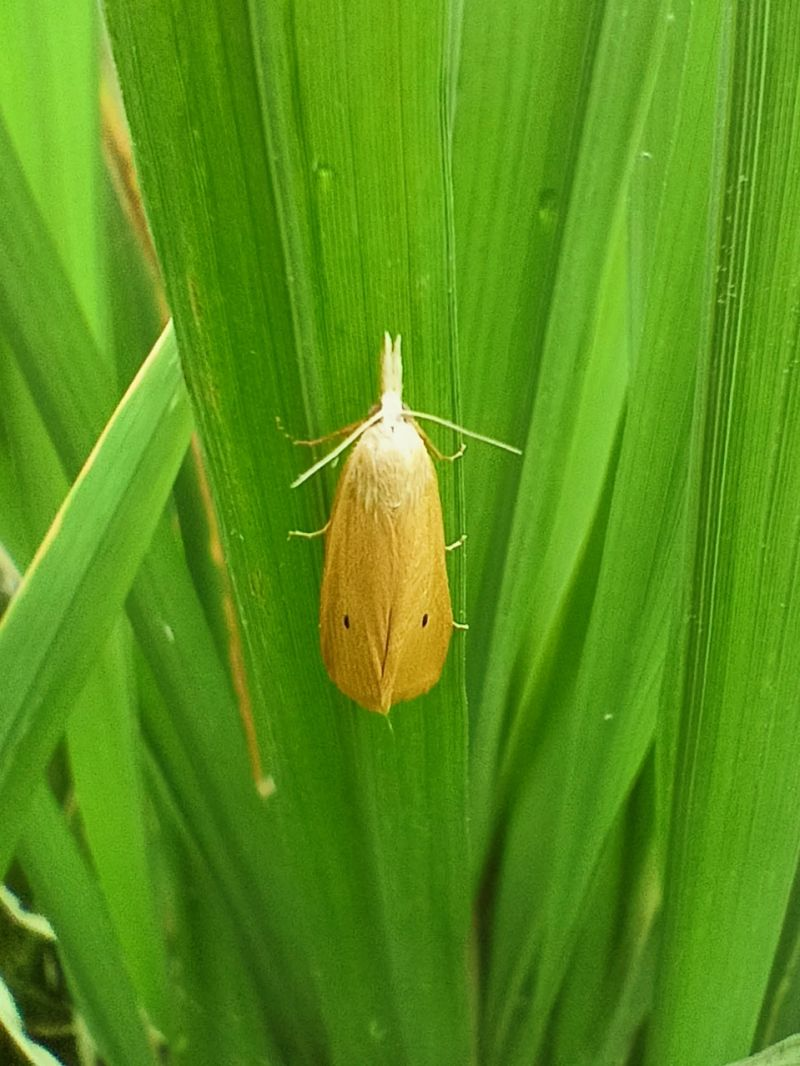
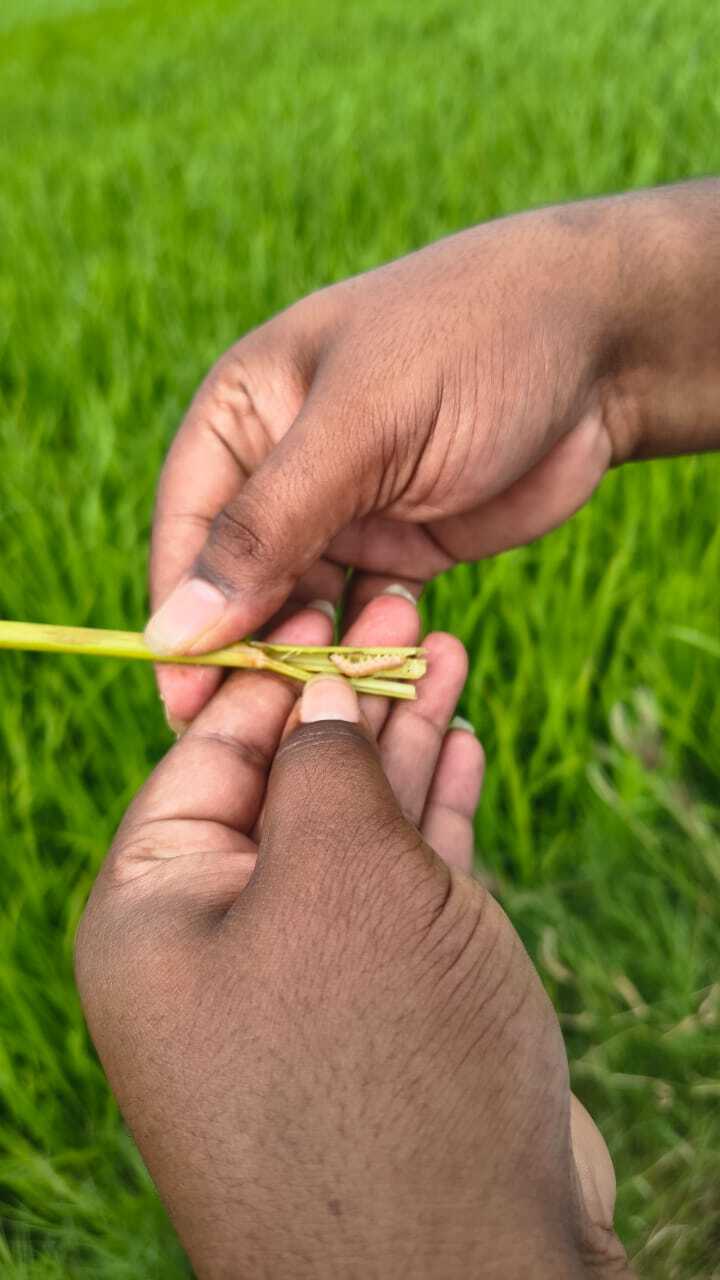
Comments: Yellow stem borer female moth has bright yellowish forewings with distinct black spot at the centre. Male moth is smaller with pale yellow fore wings and without the black spots. Yellowish white larva with orange head and the pupa is pale green and is enclosed in a white silken cocoon, fresh cocoon is pale brown and turns dark brown with age.
Management: 1. Clipping leaf tips at the time of transplantation to avoid egg masses. Cutting stubbles close to soil surface destroys pupal stages.Clipping the damaged / drooping shoots and destroying them to destroy the hidden larvae pupae or eggs. 2. By installing one light trap and pheromone traps 5-10 per acre is useful in monitoring pests incidence. Once adult moths observed in traps or egg masses are observed in the field, spray 5% Neem seed kernel suspension to ward off egg laying adults. 3. Spraying 5% Neem seed kernel suspension as repellent against egg laying adults on paddy. Stopping use of chemical pesticides to encourage natural control agents like Trichogramma, Chrysopa, lady bird beetles etc. 4. Border crop / Barrier crop - Maize, sorghum around the fields. These crops are taller with a lot of foliage which obstruct the invasion of pests. They are congenial for growth and development of natural enemies. Paddy A grade model stipulates growing vegetables and fruit trees on the bunds for home consumption. Growing crops like bhendi on field bunds attract of other larval caterpillar pests. The eggs and larvae on the trap crops should be destroyed manually and regularly. 5. Fields that are not sparyed with insecticides, natural egg parasites like Trichogramma will control the pest naturally. To augment that we may release these egg parasites @ 20000 per acre twice or thrice depending on pest incidence. 6. Putting bird perches @10 per acre to attract birds for controlling larval stages.
Control: 7. Spraying chilli-garlic suspension to kill young larvae. 8. Preparation of Ipomea + Tulsi infusion: Take 2 kg of young leaves of Ipomea and 2 kg of wild Tulsi leaves should be ground into a paste and mixed in 10 liters of water. Add 2 liters of cattle urine and 2 kg of cattle dung to this and let it ferment. After 10 days, strain it and mix it with 100 ml. per liter of water and spray it to effectively prevent stem borer. 9. The field where the stem borer is expected to live should be drained. This will kill the larvae.